


Emergent Curriculum
One method of curriculum design that has emerged to counter the “theme-of-the-week” approach to program delivery is emergent curriculum. Emergent curriculum is based on the premise that children are most successful at learning when curriculum experiences account for their interests, strengths, needs, and lived realities. Educators committed to this philosophy use observations of children throughout their day as a tool for constructing curriculum content. Meaningful learning opportunities are then provided in support of key developmental skills relevant to a specific age group. When ongoing opportunities for practice lead to skill mastery, educators respond by enriching the learning experience through the planning and implementation of increasingly difficult tasks. As children repeatedly confront and master these “achievable challenges,” they come to view themselves as competent learners. In addition, the alignment of curriculum content with individual interests and social realities serves to validate all forms of diversity and inspires a lifelong passion for learning.
In emergent curriculum, both adults and children have initiative and make decisions. This power to impact curriculum decisions and directions means that sometimes curriculum is also negotiated between what interests’ children and what adults know is necessary for children’s education and development. Ideas for curriculum emerge from responding to the interests, questions, and concerns generated within a particular environment, by a particular group of people, at a particular time. Thus, emergent curriculum is never built on children’s interests alone; teachers and parents also have interests worth bringing into the curriculum. The values and concerns of all adults involved help the classroom culture evolve.
The Benefits of Emergent Curriculum

Program Development
Children’s interests serve as the basis for program development;

Individual Strengths
Expression of individual strengths is ensured;

Unique Learning
Unique learning needs are supported;

Home/Family life
Curriculum content is an extension of home/family life;

Parental Involvement
Increased parental involvement is encouraged and;

Diversity
Diversity is celebrated in its fullest form.
Programs Offered
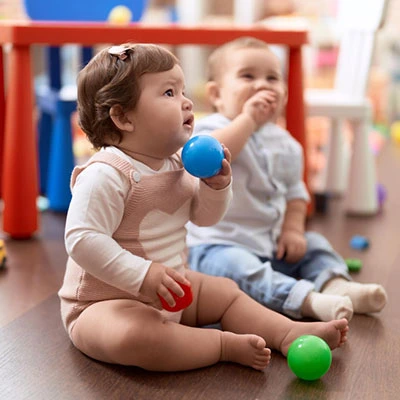
Infant Program
(12 to 19 months)At Elbow Academy, small class sizes allow your infant to develop among fellow peers and educators in an intimate setting. The primary goal of our educators is to ensure that your child’s individual needs are met, as they create an environment in which your infant is stimulated and encouraged through age-appropriate learning experiences.
Infants have the opportunity to observe and interact with the physical world around them. Our daily infant program features experiences through light, water and other sensory activities. It also includes creative arts, dramatic (pretend) play and story/music time. Such activities develop skills in your infants, including cognitive, language, fine- and gross-motor, and social emotional skills.
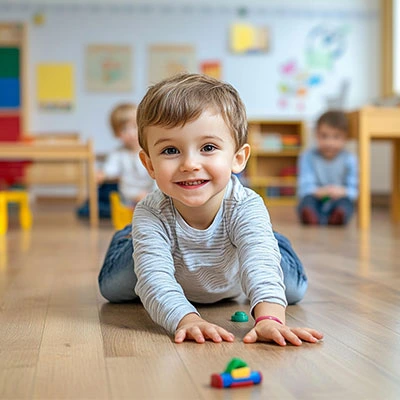
Toddler Program
(19 to 36 months)Following the infant room, your child will enter the toddler stage. At this point in their lives, curiosity and learning will become more prominent. The toddler program is designed to guide children as they develop a greater sense of curiosity and understanding. Your child will be exposed to a quiet reading area. In this area, your child can choose to participate independently in a range of logic games and puzzles, and many more stimulating activities that allow them to develop. Learning self-help skills is an important part of the curriculum. Our main focus in the toddler room is to ensure the safety and development of your child, and prepare them for the preschool classroom, in which there is a more academic approach to learning.
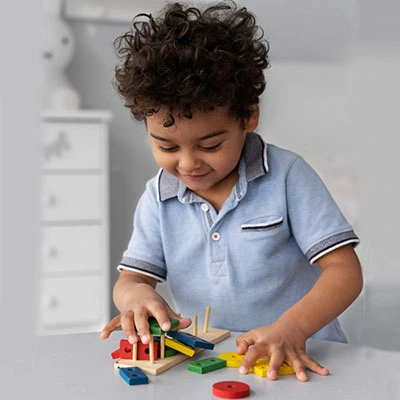
Preschool Program
(36 months to 6 years)The preschool program is the final stage of childcare at Elbow Academy. In this stage, children will continue to develop and enhance many of the skills they learned in previous stages. The focus here, then, is on teaching them to communicate in an effective way and to regulate their emotions for their next stage of early years.
Our educators focus on developing skills through daily experiences. Children will engage in experiments, activities, discussions, and projects throughout the day. They have the freedom to guide their own curriculum through their own unique interests. Educators will take on the challenge on tapping into your child’s interests to create more meaningful play.
At Elbow Academy, we recognize the importance of individuality in children. It is essential to make children feel comfortable to express themselves and their interests among trusted and loving peers and educators. Our main focus is to nurture them through a genuine love for learning. We want to prepare our little ones for future school environments and optimal success.